Top-Rated Office Pc Compared (September 2026)

Best Product
A+ Excellent
- INTEL CORE i3-14100 PROCESSOR - Experience fast, efficient performance with Intel's latest 14th Generation Core i3 processor, designed for smooth multitasking, office productivity, and everyday business applications.
- 8GB DDR5 RAM & 512GB SSD - Enjoy responsive performance with high-speed DDR5 memory and a fast 512GB solid-state drive, delivering quick boot times, rapid file access, and smooth multitasking.
- WINDOWS 11 PRO - Stay productive and secure with Microsoft's latest business operating system, featuring BitLocker encryption, Remote Desktop support, enhanced security features, and seamless Microsoft 365 integration.
- MOUSE & KEYBOARD INCLUDED - Supplied with a matching Dell mouse and keyboard, providing everything you need to get your workstation set up and start working straight out of the box.
- COMPACT BUSINESS DESIGN - A space-saving desktop chassis that fits neatly into offices, reception areas, educational environments, and home workspaces while delivering reliable day-to-day performance.
- 3 YEAR DELL ON-SITE WARRANTY - Buy with confidence knowing your desktop is backed by Dell's comprehensive 3-year on-site warranty, providing fast professional support and complete peace of mind.

Best Value
A Very Good
- Low-power AMD Ryzen 3501U : BOSGAME Mini PC E2 Air is powered by AMD Ryzen 3501U (12nm) Processor (4Cores 8Threads, 6M Cache, up to 3.7GHz). and the built-in Radeon Vega 8 Graphics is sufficient to meet common graphics needs in the office, including displaying high-resolution images, video playback, simple graphics processing tasks, etc
- Large Capacity & Expand Friendly: Bosgame mini pc comes with 8GB DDR4(Single) and 256GB M.2 PCIe 3.0 2280 SSD. Large capacity allows one to switch back and forth more applications smoothly, and the mini pc body is small in size, supports wall mounting, saves space, and is an excellent choice for office computers
- 4K Triple Display: E2 mini pc integrated with Intel UHD Graphics eligible to support 4K @60Hz UHD. Dual HDMI ports can connect 2 monitors simultaneously, and the Type C port can connect one more monitor, and perform different tasks on the triple screens, making your work more efficient with true-to-life picture quality. Ideal for visual home entertainment, home office, Zoom meeting, etc.
- Wireless Connection: The Gigabit Ethernet port design provides more applications, such as firewalls, multichannel aggregation, soft routing, file storage servers, etc. Dual-band WiFi 5 provides a faster internet experience for browsing, streaming, and gaming. Lower latency Bluetooth5.0 is more stable and efficient for connecting to multiple wireless devices such as projectors, printers, monitors, speakers, etc.
- Rich Interfaces for Connec Convenience: BOSGAME Mini PC E2 designed with 3*USB3.2, 1*USB2.0, 2*HDMI, 1*full function Type-C,1* RJ45 LAN, 1*Audio Jack (HP&MIC), easily meet office business needs, home audio and video needs. The transmission rate of USB3.2 Gen2 is up to 10Gbps, 21 times faster than USB2.0 and 2 times faster than USB3.0, which helps you to transfer files in seconds.

- 【Efficient 11th Gen Jasper Lake Quad-Core Performance】AK1Plus N5095 mini PC Powered by Intel Celeron N5095 4-core 4-thread processor with 4MB cache, max turbo up to 2.9GHz. It smoothly handles daily office work, multi-tab web browsing, Zoom video conferences, 4K media streaming and casual indie games, delivering stable low-power computing without lag for home & small business use.
- 【Dual 4K@60Hz Multi-Display】AK1Plus N5095 Mini computer built-in Intel UHD Graphics 16 EU(Execution Units) supports two independent 4K 60Hz monitors via dual HDMI 2.0 ports. Perfect for multi-tasking like spreadsheet editing while watching videos, and it supports Quick Sync Video for fast 4K video playback & lightweight editing.
- 【16 GB high-speed RAM + flexible dual M.2 slots】Equipped with 16 GB of LPDDR4X RAM for effortless multitasking with multiple browser tabs, spreadsheets and background applications. Includes a pre-installed 256 GB M.2-2280 SATA SSD for fast system and programme boot times. The second M.2-2280 slot (compatible with NVMe PCIe 3.0 and SATA SSDs) allows for storage expansion up to 2 TB and reserves the installation position for 2.5" SATA3.0 SSD enclosure(SSD not included), letting you freely upgrade storage and memory according to your usage needs– ideal for large files, photo collections and growing data volumes.
- 【Full-Featured Connectivity & Compact Silent Design】AK1Plus N5095 Mini PC Windows 11 Pro equipped with Gigabit Ethernet, dual-band WiFi 5 and Bluetooth 5.0 for stable wireless connections; multiple USB 3.2/2.0, audio jack ports for peripherals. Ultra-small lightweight chassis (12.8×12.8×5.15cm) with efficient silent cooling fan, plus VESA mount compatible to hang behind monitors and save desk space.
- 【Versatile mini PC for the office, home entertainment and more】NiPoGi AK1PLUS Mini PC is compact, quiet cooling system saves valuable desk space and operates almost silently. Ideal for home offices, digital signage, presentations in meeting rooms or as an energy-efficient Plex or NAS server. Thanks to its low energy consumption, the device is ideal for continuous operation – without high electricity bills.
- 【Why NiPoGi? Reliable Technical Support & Warranty】We offer lifetime technical support and 12 months satisfaction service. For all our NiPoGi products, please contact our professional service if you have any problems, NiPoGi will do everything to provide satisfactory service.

- 【 AMD Ryzen Mini PC】BOSGAME E5 features the AMD Ryzen 3 5300U processor (7nm, 4C/8T, 4MB Cache, up to 3.8GHz) and Radeon Graphics (1500MHz). Perfect for office tasks like high-res image display, video playback, and light graphic design
- 【RAM & SSD】Mini PC comes with 16GB Dual-Channel DDR4 RAM (up to 32GB) and a 512GB M.2 NVMe SSD. Its ample memory ensures smooth multitasking, while the compact design with wall-mount support saves space, making it an ideal office computer
- 【Triple Display】BOSGAME E5 Mini PC supports 4K video playback and AV1 decoding for stunningly realistic visuals, enhancing your experience with 4K movies and games. Equipped with one USB-C and two HDMI 2.0 ports, it enables seamless multitasking across three displays, boosting productivity without the need for constant screen switching
- 【2.5G DUAL LAN PORTS】Design dual 2.5-gigabit ethernet port design. Enjoy up to 2500Mbps data transmission speed. Ideal for working, gaming, and surfing the internet.
- 【Wireless Connection】The 2.5 Gigabit Ethernet port design provides more applications, such as firewalls, multichannel aggregation, soft routing, file storage servers, etc. Dual-band WiFi 5 provides a faster internet experience for browsing, streaming, and gaming. Lower latency Bluetooth5.0 is more stable and efficient for connecting to multiple wireless devices such as projectors, printers, monitors, speakers, etc.
- 【BOSGAME Values】All BOSGAME mini computers undergo strict aging and high-voltage testing before leaving the factory to eliminate defective products and ensure that the products work stably.

- PC Specs: Equipped with a Intel Core i7 4770 processor (renewed), 16GB DDR3 RAM, and a blazingly quick 1TB SSD, this pc delivers exceptional speed and power for seamless multitasking and efficient data storage. Pre-installed with Windows 11, this computer ensures you have access to the latest and most advanced software features. Experience the enhanced productivity, seamless multitasking, and cutting-edge security protocols offered by Windows 11
- Casing: Cutting-Edge Design and Efficient Cooling - Introducing the Brand New V100 Office case by VenoScorp, a sleek and modern solution that combines a visually appealing design with exceptional cooling capabilities. This case is engineered to provide the perfect balance between style and performance, ensuring your components stay cool even during intense workloads.
- Bundle: 1 x Computer , 1 x Wifi Adapter, 1 X Power Cable
- Item Condition: This computer comes with brand-new components, ensuring top-notch performance and reliability. The case itself is brand new and sealed, with no marks or signs of wear. From the outside, the system will appear pristine and brand new. Pc will be sent in Original Brand New Packaging. Inside, you will find a Brand New Motherboard, Ram, PSU, and a renewed CPU.
- Warranty: Peace of Mind with 1 Year Return to Base Warranty - This full bundle comes with the added assurance of a 1 Year Return to Base Warranty. We stand behind the quality and performance of this bundle, and in the unlikely event of any issues, we offer hassle-free warranty coverage. With the Return to Base Warranty. Our dedicated support team is committed to providing prompt and reliable assistance to ensure your satisfaction.

- ✅【AMD Ryzen 3 3200U】Beelink SER3 Mini Office Computer is equipped with AMD Ryzen 3 3200U (2 cores 4 threads, up to 3.5GHz), which can create a very smooth experience for your visual home entertainment, video streaming, web browsing and office work.
- ✅【High Capacity & Expandable】Beelink Mini Desktop PC comes with 8G DDR4 2400MT/S and 480G M.2 NVME 2280 SSD. 16GB RAM DDR4 can be upgraded to 32GB (16GB*2). Supports add a 2TB 2.5in 7mm SATA3 HDD.
- ✅【4K Dual Screen Display】This Beelink mini office PC comes with Radeon Vega 3 Graphics 1200 MHz. Dual 4K@60Hz screen display output via dual HDMI, allowing you to multitask with ease, enjoy 4K web browsing, video playback, TV, home theater, and enjoy entertainment with your family.
- ✅【High-speed network & multiple ports】 Beelink micro computer supports WiFi 5 (802.11ac) and Bluetooth 5.0, which offer faster and more stable network speeds. This mini PC has a variety of interface designs (2 x HDMI, 4 x USB3.2, 1 x Gigabit Ethernet LAN, 1 x DC jack, and 1 x audio jack (HP&MIC).
- ✅【Reliable Support Service】All Beelink Mini PCs have obtained CE certification and undergone rigorous testing before shipping. If you have any questions about our Mini PC, please do not hesitate to contact us. We offer lifetime technical support, 3 year worry-free warranty and 24 hours customer service.

- 【High Capacity】The product dimensions are 13” x 9.45” x 1.77”, featuring 13 individual pockets that can hold up to 360 sheets of paper. It's spacious enough to securely store all your important documents, helping you classify and find your files effectively.
- 【High-Quality Material】Made from premium, environmentally friendly PP material, this folder is acid-free, PVC-free, and of archival quality for safe storage. The waterproof and moisture-proof material ensures your documents remain in good condition and are resistant to breaking and deforming.
- 【Colored Design】The 13 Pockets File Folder features updated, vibrant inner pages for an enhanced visual experience. Small colored labels allow for convenient classification of your files, enabling you to quickly locate the papers you need.
- 【Convenient Elastic Buckle】We've improved the elastic string and button closure from previous folder designs, making it easier for users to open and close. This upgrade ensures a more relaxed and pleasant work experience, ideal for storing all your loose paperwork.
- 【Multifunctional Application】Our accordion folders are perfect for storing invoices, letters, paper, cards, receipts, contracts, and other documents. They are suitable for home, office, school, and travel use. Additionally, the stylish and simple design makes it an excellent gift for friends and family.
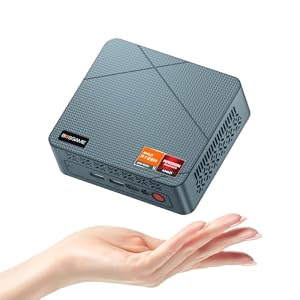
- 👍Balanced Performance: BOSGAME mini pc E2 Air Ultra-Quiet is equipped with 4C/8T, 3.7GHz, and Radeon Vega 8 Graphics, with good multitasking capabilities, and can cope with daily office, study and light content creation
- 👍Cost-effective: 3501U mini pc is pre-installed with 8GB DDR4 2400MHz (Max 32GB) and 256GB M.2 SATA 2280 PCIe 3.0 SSD, pre-installed with OS, which is enough for light video editing and programming tasks
- 👍Flexible and Versatile Interface: BOSGAME mini pc E2 Air is equipped with 3x USB3.2, 1xUSB2.0, 1xType-C, 1xHDMI 2.0, 1x DP, 2xRJ45 LAN, which can connect multiple devices at the same time without frequent plugging and unplugging, reducing unnecessary expenses and carrying troubles
- 👍High stability and anti-interference ability: The mini pc supports Auto Power On and Wake On LAN, which significantly improves the flexibility and reliability of the device and meets the needs of modern IT management and industrial applications. It is also equipped with WiFi5 and Bluetooth 5.0 to support high-speed data transmission and Internet access
- 👍Triple-screen Display: BOSGAME mini pc has a high-definition display and supports connecting three monitors at the same time, improving productivity and user experience through multi-tasking support.It is suitable for a variety of scenarios such as professional work, entertainment games and multi-tasking
More information about the best Office Pc Offers and Deals:


| Colour | Black |
| Manufacturer | Dell |
| Weight | - |


| Colour | Purple |
| Manufacturer | BOSGAME |
| Weight | - |


| Colour | Work PC |
| Manufacturer | NiPoGi |
| Weight | 390 g |
- Windows 11 Pro
- Intel Alder Lake-N95
- 16GB RAM
- 512GB M.2 SSD
- Dual Displays


| Colour | Violet |
| Manufacturer | BOSGAME |
| Weight | - |


| Colour | Black - PC Only (No Monitor) |
| Manufacturer | Veno Scorp |
| Weight | - |
- High Performance
- Large Storage Capacity
- Fast NVME SSD
- Built-in WiFi
- Pre-installed Windows 11


| Colour | SER |
| Manufacturer | Beelink |
| Weight | - |
- High performance
- Powerful graphics
- Fast processor
- Compact size
- Efficient office use


| Colour | Purple |
| Manufacturer | Lamitocs |
| Weight | - |


| Colour | Green |
| Manufacturer | BOSGAME |
| Weight | - |
Introduction to Office PCs
An office PC is a computer designed for use in a work environment. These kinds of computers are ideal for businesses and organizations that require high productivity and performance in their daily operations. Office PCs typically have modern hardware and software specifications that allow them to run numerous software programs, perform multitasking, and handle a vast amount of data with ease. They are also designed to suit different workloads, including accounting, data entry, document management, desktop publishing, and more.
Hardware Specifications
Office PCs come with a wide range of hardware specifications that cater to the specific needs of different work environments. These specifications include the processor, RAM, storage, graphics card, and other hardware components. The processor is the brain of the computer, and it determines how fast the computer can run. Office PCs typically come with Intel Core i3, i5, or i7 processors, which can handle different amounts of multitasking and operation.
Storage is another essential hardware specification that governs how much data the computer can store. Office PCs come with a standard HDD or an SSD, and sometimes a combination of the two. An SSD is faster and more efficient than an HDD and is suitable for businesses and organizations that require faster data access.
Software Specifications
Apart from the hardware specifications, office PCs come with pre-installed software that helps with tasks in the workplace. These include productivity software, such as Microsoft Office, which enables users to create, manage and edit documents, spreadsheets, and presentations. Other software that may come pre-installed on an office PC includes antivirus software and other essential applications that help keep the computer secure and running efficiently.
Conclusion
Office PCs are vital tools for businesses and organizations that require high productivity levels and performance in their operations. They are designed to suit different workloads and come with various hardware and software specifications that cater to various requirements. By having an office PC, organizations can streamline their workflow, improve productivity levels, and stay ahead of the competition.
** "Free Delivery" means that this is possible under the given conditions at the time of data retrieval from the relevant provider, but cannot be guaranteed. It is technically not possible to provide information in real-time. The shipping costs may vary under certain circumstances (different provider, place of delivery, etc.). The shipping costs shown in the further ordering process apply.
Other IMPORTANT INFORMATION that we ask you to take note of:
We may receive a commission if you make a purchase via the links on our site. This has no impact on the placement of the products on our site. Our website is part of amazon associates program - Amazon, Amazon Prime, the Amazon Logo and Amazon Prime Logo are registered trademarks of Amazon, Inc. or its affiliates.
Disclaimer:
1. The prices shown may have risen since the time we last updated them.
2. The actual price of the product on the seller’s site at the time of purchase will govern the sale.
3. It is not technically possible for the prices displayed above to be updated in real-time.
Frequently asked questions about Office Pc:
What are the minimum system requirements for an office PC?
When it comes to an office PC, there are a few minimum requirements that businesses should consider in order to ensure that their employees can perform their work effectively and efficiently. These requirements may differ depending on the specific needs of your office, but there are some basic requirements that every office computer should meet.
First and foremost, an office PC should have a reliable and up-to-date operating system. The most common operating systems used in offices are Windows, Mac OS, and Linux. The specific operating system that you choose will depend on your company's software needs, but it's important to make sure that the operating system you choose is still being supported by its provider and has up-to-date security patches.
In terms of hardware, an office PC should have a modern processor that can handle a variety of tasks. A dual-core or quad-core processor is recommended, with a speed of at least 2.5 GHz. More powerful processors may be required for jobs that require heavy processing, such as video editing or graphic design.
An office PC should also have enough memory (RAM) to handle multiple applications running simultaneously. At a minimum, an office PC should have 4 GB of RAM, but 8 GB or more is often recommended for most tasks. This will ensure that employees can work efficiently without experiencing slowdowns or crashes.
In terms of storage, an office PC should have a large enough hard drive to store important documents and files. A 500 GB hard drive should be sufficient for most offices, but larger drives are recommended if your company deals with large files such as video or audio.
Another important consideration for an office PC is connectivity. An office PC should have both wired and wireless (Wi-Fi) internet connectivity to ensure that employees can easily connect to the internet and other devices such as printers or scanners. Additionally, having multiple USB ports and an HDMI port can help employees to easily connect to external devices such as monitors and projectors.
Overall, investing in a reliable and efficient office PC can have many benefits for your business. By ensuring that your office PCs meet these minimum requirements, you can help your employees to work more efficiently and productively, ultimately leading to improved business results.
How much RAM do I need for an office PC?
When it comes to office PCs, the amount of RAM you need largely depends on the type of tasks you'll be performing. If your work involves basic office applications like word processing, spreadsheets and email, 4GB of RAM should suffice. This is because these applications are not particularly resource intensive and don't require much memory.
However, if you'll be running more demanding applications like graphic design or video editing software, then you may need to upgrade your RAM to 8GB or more. These types of software require more memory to run smoothly and efficiently. Additionally, if you need to have multiple applications open at once, more RAM will come in handy.
If you're considering upgrading your RAM, it's important to make sure your computer can handle it. Check your computer's manual or consult with an IT professional to find out how much RAM your computer can support. If your computer is only capable of supporting a limited amount of RAM, it may be time to consider upgrading to a more powerful machine.
Keep in mind that while more RAM can improve performance, it's not always the only solution. If your computer is still running slow after upgrading your RAM, there may be other underlying issues that need to be addressed.
In conclusion, the amount of RAM you need for an office PC largely depends on the type of work you'll be performing. If you're primarily using basic office applications, 4GB should suffice. However, if you'll be using more demanding software or need to have multiple applications open at once, it may be worth upgrading to 8GB or more. Be sure to check your computer's manual or consult with an IT professional before upgrading your RAM to ensure compatibility.
What is the ideal processor for an office PC?
When it comes to choosing the ideal processor for an office PC, there are a few key factors to consider. First and foremost, the processor should be powerful enough to handle typical office tasks like word processing, web browsing, and email without lag or delays. However, it should also be energy-efficient to minimize power consumption and reduce operating costs.
One of the most popular options for an office PC processor is Intel's Core i5 or i7. These processors offer excellent performance and efficiency, making them ideal for multitasking and everyday use. They also feature built-in graphics capabilities, which can eliminate the need for a separate graphics card.
Another option to consider for an office PC processor is AMD's Ryzen series. These processors are known for their high performance and affordable price points, making them a great choice for budget-conscious businesses. They also feature built-in graphics capabilities and can handle multitasking with ease.
Regardless of which processor you choose, it's important to keep in mind that the overall performance of your office PC will depend on a variety of factors, including RAM, storage capacity, and the type of software you use. However, by selecting a reliable and efficient processor, you can ensure that your office PC runs smoothly and effectively.
In addition to considering processing power and efficiency, it's also important to think about the form factor of your office PC. Some processors, such as Intel's NUC series, are designed for compact, space-saving devices that can easily fit on a desk or under a monitor. Other processors, such as AMD's Threadripper series, offer extreme processing power for more demanding tasks like video editing and 3D rendering, but may not be necessary for typical office use.
Overall, when choosing the ideal processor for an office PC, it's important to balance performance, efficiency, and cost to find the best option for your business needs. Whether you opt for an Intel Core i5 or i7, an AMD Ryzen series, or another processor altogether, taking the time to research and compare your options can help ensure that your office PC performs optimally and meets your business needs.
How much storage space do I need for an office PC?
When it comes to selecting a storage space for an office PC, there are several factors that one should consider. The amount of storage that you need is dependent on various factors such as the size of the company, type of work, and the amount of data the company creates and handles.
One of the crucial factors to consider is the size of your company. If your company has many employees and generates large volumes of data, then you need more storage for your office PC. For small companies, a computer with a storage capacity of 256GB or 512GB will be sufficient. However, medium and large companies will need a more substantial storage space ranging from 1TB to 2TB.
Another factor to consider is the type of work done in the company. For instance, CAD, multimedia editing, and video production require a lot of storage space because of the large file sizes involved. On the other hand, if your company only deals with word processing and website management, then the storage requirements can be lower. Therefore, depending on the type of work, an office PC will need varying amounts of storage space.
One should also consider the future storage needs of the office PC. As the company grows, the data generated will increase, and the storage requirements will increase. It is, therefore, essential to consider future needs when selecting the storage space for the office PC. Upgrading the storage space is also an option, but it can be costly in the long run.
Storage speed is another crucial factor. A fast storage device will enhance computer performance, thus leading to increased productivity. Solid-state drives (SSDs) are faster than traditional hard disk drives (HDDs), and they are ideal for office PCs. They can access data much faster and make boot times much quicker.
Lastly, it is essential to ensure that one has adequate backups and a reliable disaster recovery plan. In case of data loss or damage, the backups will be vital in restoring the lost files. Therefore, one should consider backup and disaster recovery when selecting the storage space for an office PC.
In conclusion, the storage requirements for an office PC depend on various factors, such as the size of the company, type of work, and the amount of data generated. Small companies will require less storage space than medium and large companies. It is also essential to consider the future storage needs of the company, as well as the speed and reliability of the storage device. Lastly, adequate backups and a reliable disaster recovery plan should be in place to ensure the safety of the company's data.
Can I use a laptop as an office PC?
In today's digital age, laptops are becoming more advanced in terms of processing power and functionality. Laptops were initially designed as a portable device for users to carry around, but they have evolved into a powerful machine capable of performing various tasks. Many people wonder if they can replace their office desktop computer with a laptop. The short answer is yes, and here are a few reasons why.
The technical specifications of laptops, such as CPU power, storage, and connectivity options, have dramatically improved in recent years. Laptops now have the capability to run resource-heavy software, making them an ideal replacement for office desktop computers. Most modern laptops feature powerful processors that can handle complex operations, ample memory for multitasking, and large storage capacities for files. With Wi-Fi and Bluetooth capabilities, wireless connectivity is no longer an issue. Some laptops even come with an HDMI output that allows users to connect their laptop to a larger monitor, making it easier to work for extended periods.
In terms of mobility, laptops are ideal for those who work from home or travel frequently. Rather than being tied down to a desk, laptops offer the comfort of working from anywhere, whether it's a coffee shop, home office, or another location. Additionally, using a laptop saves time and effort in setting up a workstation since there is no need to connect cables or peripherals. Simply open your laptop and start working.
Laptops are also ideal for cost-saving since they are affordable and provide the same functionalities as desktop computers. Since they don't require a separate monitor, keyboard, and mouse, they are more cost-efficient. Additionally, laptops use less energy than desktop computers, making them an environmentally-friendly option, since they do not contribute to a rise in energy bills. With the ability to replace your desktop computer, you also avoid the expense of purchasing a separate device, saving costs in the long run.
Another benefit of using a laptop as an office computer is the ability to keep your work documents and files in one location, even when you are not in the office. This capability is useful for remote workers or individuals who work from home. With cloud storage services such as Google Drive or Dropbox, users can access and share files with ease. This also allows for remote collaboration with colleagues, which can lead to increased productivity and team dynamics.
In conclusion, laptops offer considerable advantages over desktop computers when used as office equipment. Not only are they portable and cost-efficient, but they also offer a wide range of connectivity options and processing power. Additionally, with the ability to store and access files remotely, they save space and provide ease of use. While desktop computers may still be the gold standard for some, laptops can be an ideal solution for those in need of a portable, efficient, and versatile workstation.
What is a good graphics card for an office PC?
When it comes to an office PC, most people do not prioritize a graphics card as heavily as they would for a gaming or entertainment system. However, a good quality graphics card can make a significant difference in the performance of your office PC, particularly if you use multiple monitors or work with graphics-heavy software.
One suitable graphics card for an office PC is the NVIDIA Quadro P400, which is designed specifically for professional use. This card is capable of running up to three 4K displays simultaneously, making it ideal for anyone who requires a lot of screen real estate. In addition, it supports the latest graphics APIs and includes advanced multimedia features.
Another option to consider is the AMD Radeon Pro WX 3100, which is designed for use in workstations. It offers support for DirectX 12 and OpenGL 4.5, as well as 4GB of high-speed GDDR5 memory. This card is capable of driving multiple monitors and is well-suited to tasks such as CAD and 3D modeling.
For those on a budget, the AMD Radeon RX 550 might be a good option. This card is affordable and requires no additional power supply, making it easy to install. It supports up to three displays and offers decent performance for everyday office tasks such as browsing the web and working with basic graphics software.
The NVIDIA GeForce GTX 1650 is another budget-friendly graphics card that is capable of supporting multiple displays and is suitable for office use. It includes 4GB of GDDR5 memory and supports the latest versions of DirectX and OpenGL, making it a good choice for users who require high-quality graphics performance.
If you need a graphics card that is capable of supporting high-end software such as AutoCAD or Adobe Creative Suite, the NVIDIA Quadro P1000 might be a good option. With 4GB of GDDR5 memory, it can support up to four displays and offers superior performance when it comes to complex graphics tasks.
Ultimately, the best graphics card for your office PC will depend on your specific needs and budget. Whether you require multiple displays, support for complex software, or simply want to boost the performance of your computer, there are many quality options available on the market.
What is the best operating system for an office PC?
When it comes to operating systems for an office PC, there are several options available in the market. However, the most popular and efficient ones are Windows and macOS. Both these operating systems have their own strengths and weaknesses. Choosing the best operating system for your office PC would depend on your specific needs and preferences.
Windows is the most widely used operating system in the world and is known for its user-friendliness and compatibility. It also has a vast range of software that is available to be used in an office environment. Furthermore, Windows is known for its high-level security features, which can help protect your business against malware and other malicious cyber threats.
On the other hand, macOS has become increasingly popular in recent years, especially in creative industries such as design and publishing. macOS is known for its sleek design and user interface, which makes it very intuitive to use. It also boasts excellent compatibility with other Apple devices, making it a popular choice for businesses that use Apple products.
Another option that is gaining popularity is Linux. Although it is not as widely used as Windows or macOS, Linux is very customizable and offers a wide range of features that are ideal for businesses that require advanced IT solutions. Moreover, Linux is free and open-source, making it a cost-effective solution for businesses on a tight budget.
In conclusion, when it comes to choosing the best operating system for your office PC, you need to consider your specific needs and preferences. Each operating system has its own strengths and weaknesses, and the choice ultimately depends on your specific requirements. Nevertheless, if you are looking for a reliable and user-friendly operating system with a wide range of software, Windows or macOS would be your best bet. Alternatively, if you need advanced IT solutions and have a tight budget, Linux would be a great choice.
Should I opt for a pre-built office PC or build my own?
When it comes to choosing between a pre-built office PC and building your own, there are several factors to consider. Pre-built PCs offer convenience and simplicity, but often come at a higher cost. On the other hand, building your own PC gives you more control over the components and overall cost.
One advantage of pre-built PCs is that they typically come with a warranty and tech support. This can be especially important for businesses that rely on their computers for day-to-day operations. Pre-built PCs are also designed to work right out of the box, which means you can start using them immediately. However, the downside of pre-built PCs is that they often come with bloatware or unnecessary software that slows down the system.
Building your own PC offers several advantages, including the ability to choose the exact components you want. This can result in a more powerful computer at a lower cost. Building a PC requires a bit more knowledge and effort, but there are many online resources and tutorials available to help. Additionally, building your own PC allows you to avoid bloatware and only install the programs you need.
Another benefit of building your own PC is the ability to upgrade and customize it over time. You can easily add more RAM or increase storage capacity as your needs change. This also means that you can avoid having to purchase a completely new pre-built PC every few years when it becomes outdated.
However, building your own PC does come with some downsides. One of the biggest challenges is troubleshooting any issues that arise. You will need to have some technical knowledge and be comfortable troubleshooting and repairing any problems that arise. Additionally, building a PC takes more effort and time than simply purchasing a pre-built option.
In conclusion, deciding whether to opt for a pre-built office PC or build your own ultimately depends on your needs and skill level. If you want a computer that works right out of the box with tech support and a warranty, a pre-built PC may be the best option for you. However, if you want more control over the components and the ability to upgrade and customize your PC over time, building your own is a great option. With the wealth of resources available online, building your own PC is becoming more accessible and easier than ever before.
How many monitors can I connect to an office PC?
If you're working in an office setting, you're probably wondering how many monitors you can connect to your office PC. Generally, the number of monitors that you can connect to your PC is dependent on your computer's hardware components, including the graphics card, CPU, and the number of graphics ports the computer offers. However, most newer office PCs are designed to support multiple monitors.
One of the most common ways to connect multiple monitors to an office PC is through a video splitter or docking station. These devices allow you to split a single DisplayPort, HDMI, or VGA port into multiple ports, allowing you to connect two or more monitors to your office PC. The number of monitors that you can connect to a single video splitter depends on the device you're using and the specific ports it supports.
Another way to connect multiple monitors to your office PC is by using a graphics card that supports multiple displays. Many graphics cards today support two or more displays by default, and some models can support up to four or six displays. However, your computer's CPU should also have the capacity to support multiple displays, or the graphics card will not function optimally.
Apart from the hardware, your computer's operating system also plays a significant role in determining the number of monitors you can connect. Most modern operating systems, including Windows 10, support multiple monitor setups. Windows 10 users can connect up to four monitors, while Windows 7 and 8 users can connect up to two monitors.
Finally, the type of work you're doing also affects the number of monitors you can use. For example, if you're working on a project that requires many windows open at once, you'll benefit from having multiple monitors. On the other hand, if your work involves using many applications at once, a single large and high-resolution monitor may be more suitable.
In conclusion, the number of monitors you can connect to an office PC depends on several factors, including the computer's hardware components, the operating system, and the type of work you're doing. However, most modern office PCs are designed to support multiple monitors, and with the right hardware and operating system, you should be able to connect multiple displays to your office PC.
Is it necessary to have a CD/DVD drive in an office PC?
In today's digital era, there has been a significant decline in the use of CDs and DVDs. With the increased use of cloud storage and online streaming services, the need for physical media has reduced. Therefore, it is becoming less necessary for an office PC to have a CD/DVD drive.
One major advantage of not having a CD/DVD drive is that it saves space. Modern PCs are becoming slimmer, and the absence of a CD/DVD drive allows for smaller and more efficient designs. This can also lead to cost savings, as it eliminates the need for additional components and reduces maintenance expenses.
Additionally, not having a CD/DVD drive can increase security. CDs and DVDs can be used to transfer viruses or malware, and unauthorized users can easily access sensitive data. By removing this access point, you reduce the risk of outside threats and preserve your confidential information.
However, it is important to note that some businesses still rely on CDs and DVDs for certain operations. For example, software installation or data backup may require the use of physical media. In these situations, it is necessary to have a CD/DVD drive or to use external devices that can read disks.
Another factor to consider is user preference. Some employees may still have a collection of CDs or DVDs that they use regularly and may prefer to have a drive for their personal use. Alternatively, some workers may prefer an external drive that they can easily connect and disconnect as needed.
In conclusion, while it is becoming less necessary to have a CD/DVD drive in an office PC, it ultimately depends on the specific needs of each business. It may be more practical and cost-effective to forego the drive, but it is important to consider any potential drawbacks or limitations. Ultimately, the decision should be made based on the specific workflow and requirements of the company.
Other customers are also looking for the following product categories right now:
Office Pc Review - Frequently asked questions
Which offer is the review winner product in September 2022?
You can instantly check the price and get further information here.
What deal with the best value for money is available according to our review / test?
The latest price we catched was
